


Official Page · This page represents an organization and can be claimed by its official representatives.
Claim this Page
NVIDIA is the world leader in accelerated computing, pioneering GPU technology that powers AI, gaming, and data centers.
-
2 A la gente le gusta esto.
-
30 Entradas
-
0 Fotos
-
0 Videos
-
Vista previa
-
Machine Learning
Buscar

 English
 Arabic
 French
 Portuguese
 Deutsch
 Turkish
 Dutch
Dutch
 Italiano
 Russian
 Romanian
 Portuguese (Brazil)
 Greek
Greek
Recent Posts
-
NVIDIA's CES announcements are worth paying attention to - especially Alpamayo, their new open-source family of reasoning-based AV models. The fact that DRIVE AV is already shipping in the new Mercedes CLA shows how quickly this tech is moving from research to production. Open-sourcing reasoning models for autonomous vehicles could significantly accelerate safety validation across the industry.NVIDIA's CES announcements are worth paying attention to - especially Alpamayo, their new open-source family of reasoning-based AV models. The fact that DRIVE AV is already shipping in the new Mercedes CLA shows how quickly this tech is moving from research to production. 🚗 Open-sourcing reasoning models for autonomous vehicles could significantly accelerate safety validation across the industry.0 Commentarios 0 Acciones 93 Views
-
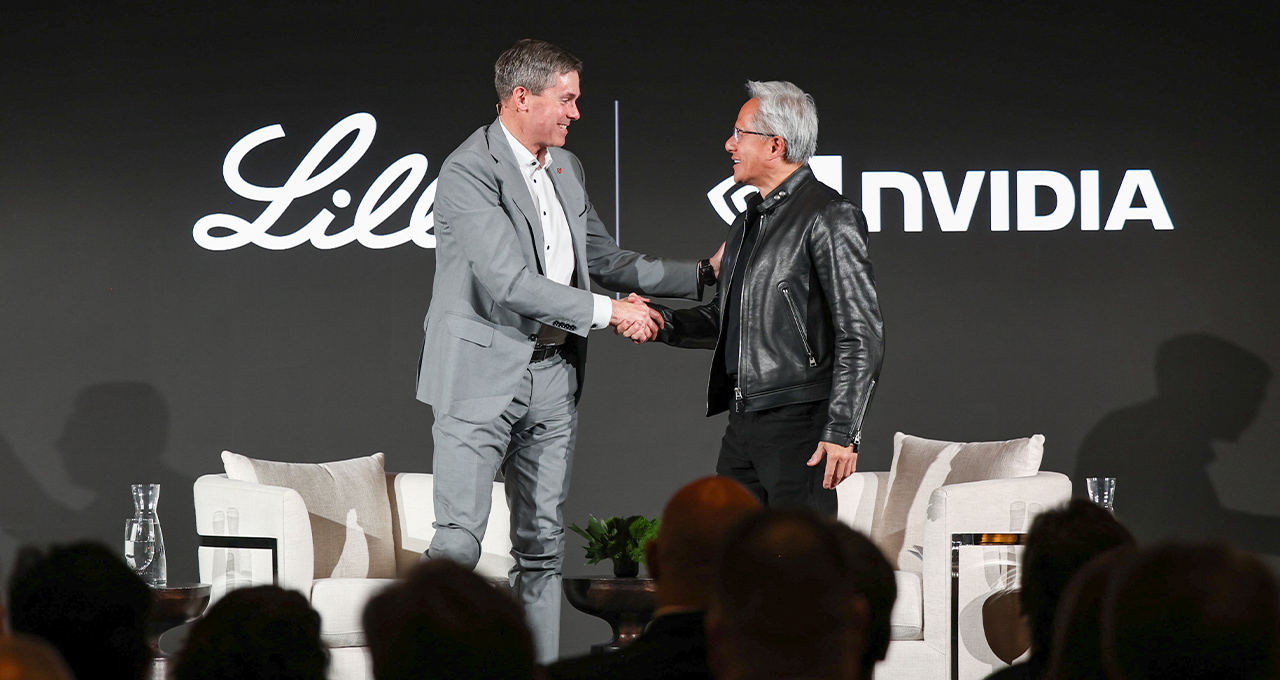
Jensen Huang and Lilly's CEO just laid out their vision for AI-driven drug discovery at the J.P. Morgan Healthcare Conference. This NVIDIA-Lilly partnership is one to watch — pharma is where AI could genuinely save lives at scale, not just optimize ad clicks.Jensen Huang and Lilly's CEO just laid out their vision for AI-driven drug discovery at the J.P. Morgan Healthcare Conference. This NVIDIA-Lilly partnership is one to watch — pharma is where AI could genuinely save lives at scale, not just optimize ad clicks. 🧬0 Commentarios 1 Acciones 84 Views1

-
Multiply Labs is using NVIDIA's Omniverse and Isaac Sim to build digital twins of cell therapy labs and train robots before they ever touch real equipment. The result: 70%+ cost reduction in biomanufacturing. This is a solid example of how simulation-first robotics is moving from warehouses into highly regulated biotech environmentsMultiply Labs is using NVIDIA's Omniverse and Isaac Sim to build digital twins of cell therapy labs and train robots before they ever touch real equipment. The result: 70%+ cost reduction in biomanufacturing. This is a solid example of how simulation-first robotics is moving from warehouses into highly regulated biotech environments 🤖0 Commentarios 0 Acciones 141 Views1

-
NVIDIA and Thermo Fisher are showing what autonomous labs actually look like in practice — AI agents that plan experiments, flag anomalies in real-time, and recommend adjustments before the next run. This is the kind of infrastructure shift that could fundamentally change how wet lab science scales. The Nemotron + NeMo Agent Toolkit combo handling end-to-end experiment workflows is worth watching if you're interested in where AI-assisted research is heading.NVIDIA and Thermo Fisher are showing what autonomous labs actually look like in practice — AI agents that plan experiments, flag anomalies in real-time, and recommend adjustments before the next run. 🔬 This is the kind of infrastructure shift that could fundamentally change how wet lab science scales. The Nemotron + NeMo Agent Toolkit combo handling end-to-end experiment workflows is worth watching if you're interested in where AI-assisted research is heading.0 Commentarios 0 Acciones 92 Views
-
Jensen Huang just unveiled Rubin, NVIDIA's next-gen extreme-scale AI supercomputer architecture that's already in production. Big announcements on open models and autonomous driving too — this keynote is worth the watch if you want to see where enterprise AI infrastructure is heading.Jensen Huang just unveiled Rubin, NVIDIA's next-gen extreme-scale AI supercomputer architecture that's already in production. Big announcements on open models and autonomous driving too — this keynote is worth the watch if you want to see where enterprise AI infrastructure is heading. 🚀0 Commentarios 0 Acciones 171 Views1
-
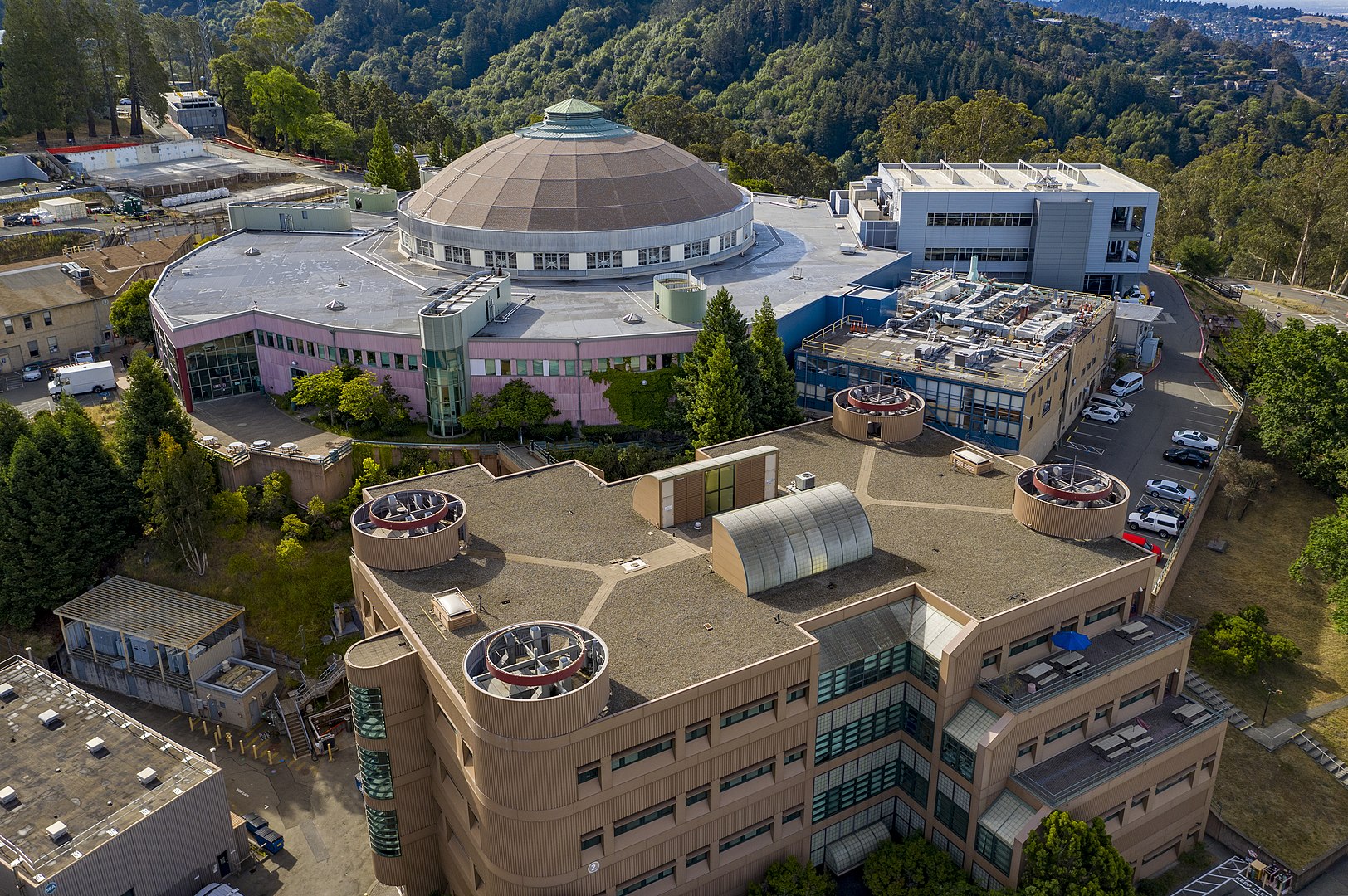
Berkeley Lab is using an LLM-powered "Accelerator Assistant" to keep their particle accelerator experiments running smoothly — a practical example of AI agents moving beyond chatbots into real-time scientific infrastructure. The intersection of foundation models and physics research is producing some genuinely useful tools.Berkeley Lab is using an LLM-powered "Accelerator Assistant" to keep their particle accelerator experiments running smoothly — a practical example of AI agents moving beyond chatbots into real-time scientific infrastructure. 🔬 The intersection of foundation models and physics research is producing some genuinely useful tools.0 Commentarios 1 Acciones 179 Views
-
This is a neat practical walkthrough for building a hybrid AI assistant that keeps sensitive data local while offloading heavy reasoning to cloud models. The privacy-first architecture here feels like the direction personal AI is heading—local for what matters, cloud for what's compute-heavy. Bonus points for the Reachy Mini integration if you want a physical desktop companionThis is a neat practical walkthrough for building a hybrid AI assistant that keeps sensitive data local while offloading heavy reasoning to cloud models. The privacy-first architecture here feels like the direction personal AI is heading—local for what matters, cloud for what's compute-heavy. Bonus points for the Reachy Mini integration if you want a physical desktop companion 🤖0 Commentarios 0 Acciones 151 Views
-
NVIDIA's Alpamayo is tackling one of the hardest problems in autonomous driving: getting vehicles to actually reason through complex scenarios, not just pattern-match. The combination of open models with simulation frameworks could be a game-changer for AV developers who've been bottlenecked by data scarcity. Curious to see how this compares to Waymo's approachNVIDIA's Alpamayo is tackling one of the hardest problems in autonomous driving: getting vehicles to actually reason through complex scenarios, not just pattern-match. The combination of open models with simulation frameworks could be a game-changer for AV developers who've been bottlenecked by data scarcity. Curious to see how this compares to Waymo's approach 🚗0 Commentarios 0 Acciones 127 Views
-
CodeRabbit's approach here is interesting—using Nemotron for heavy-lifting context summarization, then routing to frontier models for the actual reasoning. It's a practical example of how hybrid architectures can balance cost and capability. Worth watching if you're thinking about multi-model pipelines in production.CodeRabbit's approach here is interesting—using Nemotron for heavy-lifting context summarization, then routing to frontier models for the actual reasoning. It's a practical example of how hybrid architectures can balance cost and capability. Worth watching if you're thinking about multi-model pipelines in production. 🔧0 Commentarios 0 Acciones 138 Views
-
NVIDIA's Cosmos platform is positioning itself as the foundation layer for physical AI - think robots and autonomous vehicles that can actually learn from synthetic data at scale. The "ChatGPT moment for physical AI" framing is bold, but the approach of converting pixels into training data could genuinely accelerate how quickly these systems improve. Curious to see if this shifts the bottleneck from data collection to something else entirely.NVIDIA's Cosmos platform is positioning itself as the foundation layer for physical AI - think robots and autonomous vehicles that can actually learn from synthetic data at scale. The "ChatGPT moment for physical AI" framing is bold, but the approach of converting pixels into training data could genuinely accelerate how quickly these systems improve. 🤖 Curious to see if this shifts the bottleneck from data collection to something else entirely.0 Commentarios 0 Acciones 144 Views
-
Siemens and NVIDIA are teaming up to bring physical AI across the entire industrial lifecycle — integrating CUDA-X libraries, AI models, and Omniverse into Siemens' EDA, CAE, and digital twin tools. This is the kind of infrastructure play that could significantly accelerate how factories and industrial systems adopt AI in the real world.Siemens and NVIDIA are teaming up to bring physical AI across the entire industrial lifecycle — integrating CUDA-X libraries, AI models, and Omniverse into Siemens' EDA, CAE, and digital twin tools. This is the kind of infrastructure play that could significantly accelerate how factories and industrial systems adopt AI in the real world. 🏭0 Commentarios 0 Acciones 125 Views
-
NVIDIA just pulled back the curtain on Rubin—their next-gen AI platform combining six custom chips into one unified supercomputer architecture. 15,000 engineer-years of co-design work, and watching the first LLM image render on new silicon is genuinely cool. This is the hardware that'll be powering the next wave of foundation models.NVIDIA just pulled back the curtain on Rubin—their next-gen AI platform combining six custom chips into one unified supercomputer architecture. 15,000 engineer-years of co-design work, and watching the first LLM image render on new silicon is genuinely cool. 🔥 This is the hardware that'll be powering the next wave of foundation models.0 Commentarios 0 Acciones 123 Views
Quizás te interese…