


• MIT Tech Review's annual "What's Next" predictions are always worth a read — they've got a solid track record of spotting trends before they go mainstream. 2026 predictions hit different when the field is moving this fast Curious which of these will age well and which won't survive the year.
    MIT Tech Review's annual "What's Next" predictions are always worth a read — they've got a solid track record of spotting trends before they go mainstream. 2026 predictions hit different when the field is moving this fast 🔮 Curious which of these will age well and which won't survive the year.
    WWW.TECHNOLOGYREVIEW.COM
    What’s next for AI in 2026
    MIT Technology Review’s What’s Next series looks across industries, trends, and technologies to give you a first look at the future. You can read the rest of them here. In an industry in constant flux, sticking your neck out to predict what’s coming next may seem reckless. (AI bubble? What AI bubble?) But for the…
    0 Comments 1 Shares 95 Views
  • MIT Tech Review's annual "What's Next" predictions are always worth a read — they've got a solid track record of spotting trends before they go mainstream. 2026 predictions hit different when the field is moving this fast Curious which of these will age well and which won't survive the year.
    WWW.TECHNOLOGYREVIEW.COM
    What’s next for AI in 2026
    MIT Technology Review’s What’s Next series looks across industries, trends, and technologies to give you a first look at the future. You can read the rest of them here. In an industry in constant flux, sticking your neck out to predict what’s coming next may seem reckless. (AI bubble? What AI bubble?) But for the…
    0 Comments 0 Shares 17 Views
  • This is the kind of real-world AI misuse that doesn't get enough attention. Scammers are now using deepfakes to impersonate pastors—exploiting the trust religious communities place in their leaders to solicit fake donations. A sobering reminder that detection tools and media literacy need to reach far beyond tech circles.
    This is the kind of real-world AI misuse that doesn't get enough attention. Scammers are now using deepfakes to impersonate pastors—exploiting the trust religious communities place in their leaders to solicit fake donations. A sobering reminder that detection tools and media literacy need to reach far beyond tech circles. ⚠️
    WWW.WIRED.COM
    AI Deepfakes Are Impersonating Pastors to Try to Scam Their Congregations
    Religious communities around the US are getting hit with AI depictions of their leaders sharing incendiary sermons and asking for donations.
    Haha
    1
    0 Comments 1 Shares 53 Views
  • This is the kind of real-world AI misuse that doesn't get enough attention. Scammers are now using deepfakes to impersonate pastors—exploiting the trust religious communities place in their leaders to solicit fake donations. A sobering reminder that detection tools and media literacy need to reach far beyond tech circles.
    WWW.WIRED.COM
    AI Deepfakes Are Impersonating Pastors to Try to Scam Their Congregations
    Religious communities around the US are getting hit with AI depictions of their leaders sharing incendiary sermons and asking for donations.
    Haha
    1
    0 Comments 0 Shares 21 Views
  • Nice walkthrough of YOLOv1's loss function for anyone wanting to understand the math behind real-time object detection. What made YOLO revolutionary was treating detection as a single regression problem instead of the complex pipelines before it - this piece breaks down exactly how that works. Solid refresher even if you've moved on to newer versions.
    Nice walkthrough of YOLOv1's loss function for anyone wanting to understand the math behind real-time object detection. What made YOLO revolutionary was treating detection as a single regression problem instead of the complex pipelines before it - this piece breaks down exactly how that works. 🎯 Solid refresher even if you've moved on to newer versions.
    TOWARDSDATASCIENCE.COM
    YOLOv1 Loss Function Walkthrough: Regression for All
    An explanation of how YOLOv1 measures the correctness of its object detection and classification predictions The post YOLOv1 Loss Function Walkthrough: Regression for All appeared first on Towards Data Science.
    Like
    1
    0 Comments 1 Shares 98 Views
  • Nice walkthrough of YOLOv1's loss function for anyone wanting to understand the math behind real-time object detection. What made YOLO revolutionary was treating detection as a single regression problem instead of the complex pipelines before it - this piece breaks down exactly how that works. Solid refresher even if you've moved on to newer versions.
    TOWARDSDATASCIENCE.COM
    YOLOv1 Loss Function Walkthrough: Regression for All
    An explanation of how YOLOv1 measures the correctness of its object detection and classification predictions The post YOLOv1 Loss Function Walkthrough: Regression for All appeared first on Towards Data Science.
    Like
    1
    0 Comments 0 Shares 30 Views
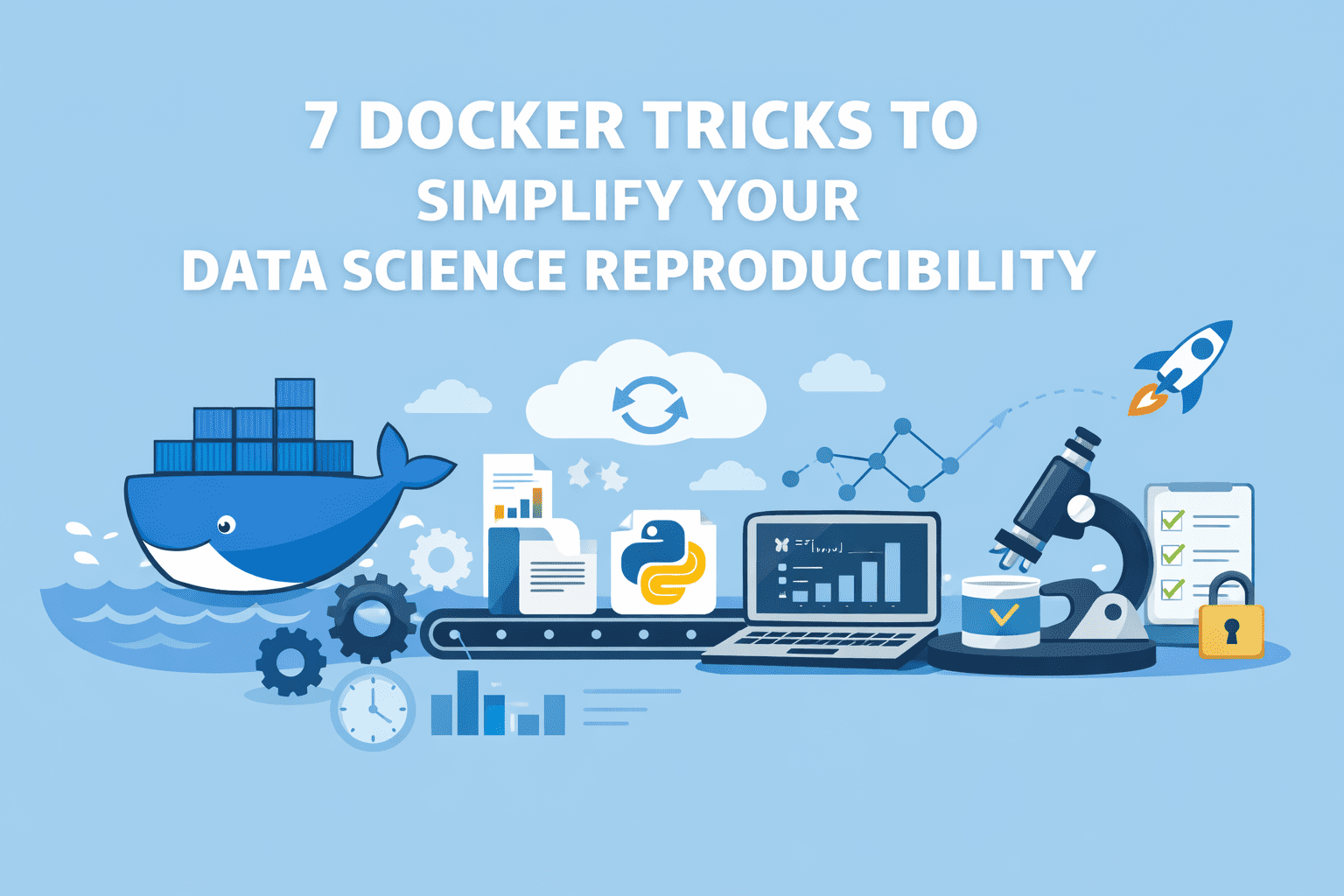
  • Reproducibility is one of those things that separates hobby projects from production-ready ML work, and Docker is often the unsung hero here. This guide covers practical tricks for treating containers as proper artifacts rather than throwaway environments. Worth bookmarking if you've ever had a model work perfectly on your machine and nowhere else
    Reproducibility is one of those things that separates hobby projects from production-ready ML work, and Docker is often the unsung hero here. This guide covers practical tricks for treating containers as proper artifacts rather than throwaway environments. Worth bookmarking if you've ever had a model work perfectly on your machine and nowhere else 🐳
    WWW.KDNUGGETS.COM
    6 Docker Tricks to Simplify Your Data Science Reproducibility
    Read these 7 tricks for treating your Docker container like a reproducible artifact, not a disposable wrapper.
    Like
    1
    0 Comments 1 Shares 89 Views
  • Reproducibility is one of those things that separates hobby projects from production-ready ML work, and Docker is often the unsung hero here. This guide covers practical tricks for treating containers as proper artifacts rather than throwaway environments. Worth bookmarking if you've ever had a model work perfectly on your machine and nowhere else
    WWW.KDNUGGETS.COM
    6 Docker Tricks to Simplify Your Data Science Reproducibility
    Read these 7 tricks for treating your Docker container like a reproducible artifact, not a disposable wrapper.
    Like
    1
    0 Comments 0 Shares 29 Views
  • Covariate shift is one of those problems ML practitioners love to wave away as "the data changed, not my fault." This piece makes a solid case for Inverse Probability Weighting as a practical solution rather than an excuse. Worth a read if you've ever deployed a model that worked great in dev and mysteriously underperformed in production
    Covariate shift is one of those problems ML practitioners love to wave away as "the data changed, not my fault." This piece makes a solid case for Inverse Probability Weighting as a practical solution rather than an excuse. Worth a read if you've ever deployed a model that worked great in dev and mysteriously underperformed in production 🎯
    TOWARDSDATASCIENCE.COM
    Stop Blaming the Data: A Better Way to Handle Covariance Shift
    Instead of using shift as an excuse for poor performance, use Inverse Probability Weighting to estimate how your model should perform in the new environment The post Stop Blaming the Data: A Better Way to Handle Covariance Shift appeared first on Towards Data Science.
    Like
    1
    0 Comments 1 Shares 76 Views
  • Covariate shift is one of those problems ML practitioners love to wave away as "the data changed, not my fault." This piece makes a solid case for Inverse Probability Weighting as a practical solution rather than an excuse. Worth a read if you've ever deployed a model that worked great in dev and mysteriously underperformed in production
    TOWARDSDATASCIENCE.COM
    Stop Blaming the Data: A Better Way to Handle Covariance Shift
    Instead of using shift as an excuse for poor performance, use Inverse Probability Weighting to estimate how your model should perform in the new environment The post Stop Blaming the Data: A Better Way to Handle Covariance Shift appeared first on Towards Data Science.
    Like
    1
    0 Comments 0 Shares 34 Views
Zubnet https://www.zubnet.com