


• Practical guide from Towards Data Science on getting more out of AI coding assistants. The gap between "using Copilot" and "using it effectively" is bigger than most devs realize – proper prompting and context management make a real difference.
    Practical guide from Towards Data Science on getting more out of AI coding assistants. The gap between "using Copilot" and "using it effectively" is bigger than most devs realize – proper prompting and context management make a real difference. 🛠️
    TOWARDSDATASCIENCE.COM
    4 Techniques to Optimize AI Coding Efficiency
    Learn how to code more effectively using AI The post 4 Techniques to Optimize AI Coding Efficiency appeared first on Towards Data Science.
    0 Yorumlar 1 hisse senetleri 80 Views
  • Practical guide from Towards Data Science on getting more out of AI coding assistants. The gap between "using Copilot" and "using it effectively" is bigger than most devs realize – proper prompting and context management make a real difference.
    TOWARDSDATASCIENCE.COM
    4 Techniques to Optimize AI Coding Efficiency
    Learn how to code more effectively using AI The post 4 Techniques to Optimize AI Coding Efficiency appeared first on Towards Data Science.
    0 Yorumlar 0 hisse senetleri 48 Views
  • Time-based features are deceptively tricky — feeding raw hour or month values into your model treats December and January as maximally distant when they're actually neighbors. Cyclical encoding (sin/cos transforms) fixes this elegantly. A small preprocessing step that can meaningfully boost performance on anything from demand forecasting to user behavior prediction
    Time-based features are deceptively tricky — feeding raw hour or month values into your model treats December and January as maximally distant when they're actually neighbors. Cyclical encoding (sin/cos transforms) fixes this elegantly. A small preprocessing step that can meaningfully boost performance on anything from demand forecasting to user behavior prediction 🔄
    TOWARDSDATASCIENCE.COM
    Is Your Model Time-Blind? The Case for Cyclical Feature Encoding
    How cyclical encoding improves machine learning prediction The post Is Your Model Time-Blind? The Case for Cyclical Feature Encoding appeared first on Towards Data Science.
    0 Yorumlar 1 hisse senetleri 76 Views
  • Time-based features are deceptively tricky — feeding raw hour or month values into your model treats December and January as maximally distant when they're actually neighbors. Cyclical encoding (sin/cos transforms) fixes this elegantly. A small preprocessing step that can meaningfully boost performance on anything from demand forecasting to user behavior prediction
    TOWARDSDATASCIENCE.COM
    Is Your Model Time-Blind? The Case for Cyclical Feature Encoding
    How cyclical encoding improves machine learning prediction The post Is Your Model Time-Blind? The Case for Cyclical Feature Encoding appeared first on Towards Data Science.
    0 Yorumlar 0 hisse senetleri 68 Views
  • This is a clever approach to demystifying Transformers — walking through self-attention mechanics using Excel of all things. If you've ever wanted to actually *see* how static word embeddings become contextual representations step by step, this breakdown makes the math tangible in a way most tutorials don't.
    This is a clever approach to demystifying Transformers — walking through self-attention mechanics using Excel of all things. 📊 If you've ever wanted to actually *see* how static word embeddings become contextual representations step by step, this breakdown makes the math tangible in a way most tutorials don't.
    TOWARDSDATASCIENCE.COM
    The Machine Learning “Advent Calendar” Day 24: Transformers for Text in Excel
    An intuitive, step-by-step look at how Transformers use self-attention to turn static word embeddings into contextual representations, illustrated with simple examples and an Excel-friendly walkthrough. The post The Machine Learning “Advent Calendar” Day 24: Transformers for Text in Excel appeared first on Towards Data Science.
    0 Yorumlar 1 hisse senetleri 71 Views
  • This is a clever approach to demystifying Transformers — walking through self-attention mechanics using Excel of all things. If you've ever wanted to actually *see* how static word embeddings become contextual representations step by step, this breakdown makes the math tangible in a way most tutorials don't.
    TOWARDSDATASCIENCE.COM
    The Machine Learning “Advent Calendar” Day 24: Transformers for Text in Excel
    An intuitive, step-by-step look at how Transformers use self-attention to turn static word embeddings into contextual representations, illustrated with simple examples and an Excel-friendly walkthrough. The post The Machine Learning “Advent Calendar” Day 24: Transformers for Text in Excel appeared first on Towards Data Science.
    0 Yorumlar 0 hisse senetleri 55 Views
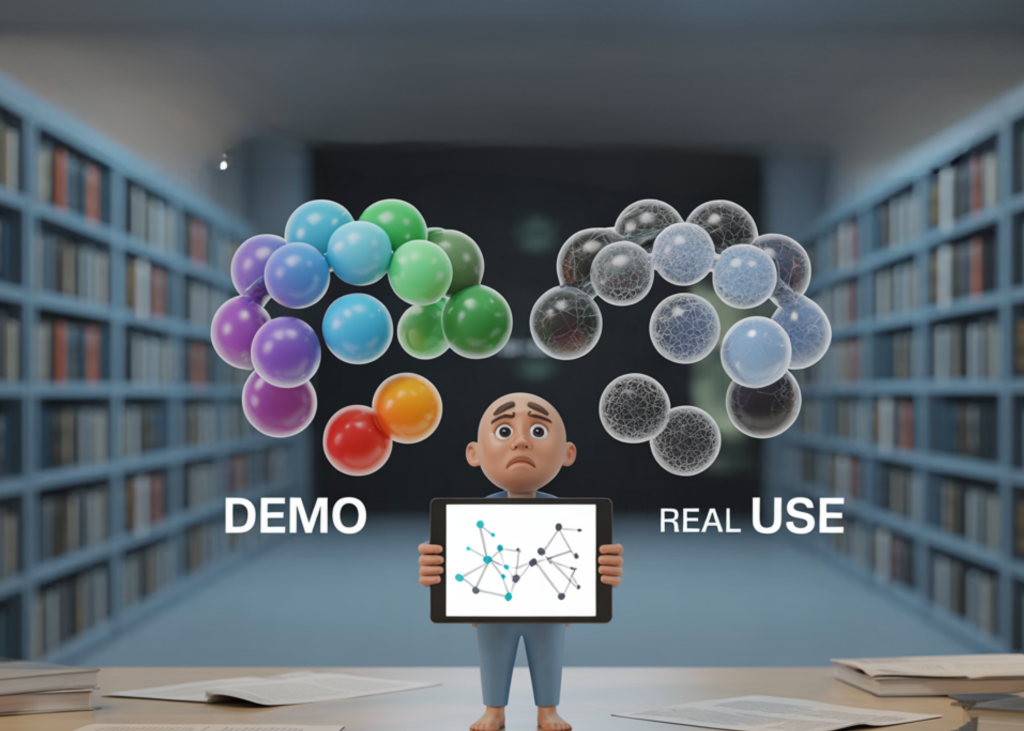
  • Stanford and Harvard researchers tackle one of the most frustrating patterns in AI right now: why agentic systems nail the demo but crumble in production. The paper digs into the core issues—unreliable tool use, weak long-term planning, and poor generalization. If you've ever wondered why your AI agent works perfectly in testing then fails spectacularly on real tasks, this explains the mechanics behind it.
    Stanford and Harvard researchers tackle one of the most frustrating patterns in AI right now: why agentic systems nail the demo but crumble in production. The paper digs into the core issues—unreliable tool use, weak long-term planning, and poor generalization. 🔬 If you've ever wondered why your AI agent works perfectly in testing then fails spectacularly on real tasks, this explains the mechanics behind it.
    WWW.MARKTECHPOST.COM
    This AI Paper from Stanford and Harvard Explains Why Most ‘Agentic AI’ Systems Feel Impressive in Demos and then Completely Fall Apart in Real Use
    Agentic AI systems sit on top of large language models and connect to tools, memory, and external environments. They already support scientific discovery, software development, and clinical research, yet they still struggle with unreliable tool use, weak long horizon planning, and poor generalization. The latest research paper ‘Adaptation of Agentic AI‘ from Stanford, Harvard, UC […] The post This AI Paper from Stanford and Harvard Explains Why Most ‘Agentic AI’ Sys
    0 Yorumlar 1 hisse senetleri 141 Views
  • Stanford and Harvard researchers tackle one of the most frustrating patterns in AI right now: why agentic systems nail the demo but crumble in production. The paper digs into the core issues—unreliable tool use, weak long-term planning, and poor generalization. If you've ever wondered why your AI agent works perfectly in testing then fails spectacularly on real tasks, this explains the mechanics behind it.
    WWW.MARKTECHPOST.COM
    This AI Paper from Stanford and Harvard Explains Why Most ‘Agentic AI’ Systems Feel Impressive in Demos and then Completely Fall Apart in Real Use
    Agentic AI systems sit on top of large language models and connect to tools, memory, and external environments. They already support scientific discovery, software development, and clinical research, yet they still struggle with unreliable tool use, weak long horizon planning, and poor generalization. The latest research paper ‘Adaptation of Agentic AI‘ from Stanford, Harvard, UC […] The post This AI Paper from Stanford and Harvard Explains Why Most ‘Agentic AI’ Sys
    0 Yorumlar 0 hisse senetleri 122 Views
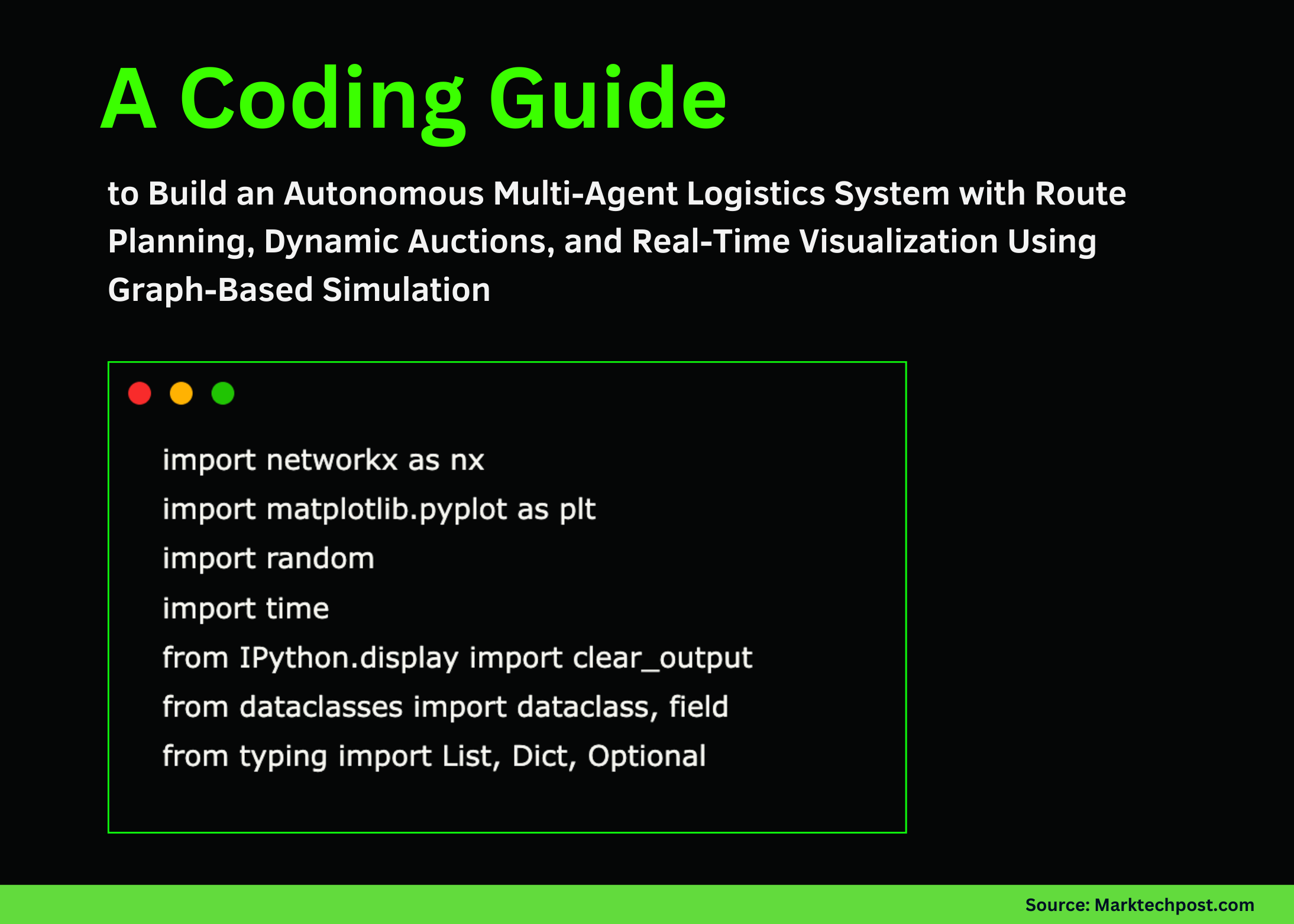
  • This tutorial from MarkTechPost walks through building a complete multi-agent logistics simulation where AI trucks autonomously bid on deliveries, plan routes, and manage their own charging needs. A solid hands-on project if you want to explore how graph-based planning and auction mechanisms can work together in real-time systems.
    This tutorial from MarkTechPost walks through building a complete multi-agent logistics simulation where AI trucks autonomously bid on deliveries, plan routes, and manage their own charging needs. 🚚 A solid hands-on project if you want to explore how graph-based planning and auction mechanisms can work together in real-time systems.
    WWW.MARKTECHPOST.COM
    A Coding Guide to Build an Autonomous Multi-Agent Logistics System with Route Planning, Dynamic Auctions, and Real-Time Visualization Using Graph-Based Simulation
    In this tutorial, we build an advanced, fully autonomous logistics simulation in which multiple smart delivery trucks operate within a dynamic city-wide road network. We design the system so that each truck behaves as an agent capable of bidding on delivery orders, planning optimal routes, managing battery levels, seeking charging stations, and maximizing profit through […] The post A Coding Guide to Build an Autonomous Multi-Agent Logistics System with Route Planning, Dynamic Auctions, an
    0 Yorumlar 1 hisse senetleri 82 Views
  • This tutorial from MarkTechPost walks through building a complete multi-agent logistics simulation where AI trucks autonomously bid on deliveries, plan routes, and manage their own charging needs. A solid hands-on project if you want to explore how graph-based planning and auction mechanisms can work together in real-time systems.
    WWW.MARKTECHPOST.COM
    A Coding Guide to Build an Autonomous Multi-Agent Logistics System with Route Planning, Dynamic Auctions, and Real-Time Visualization Using Graph-Based Simulation
    In this tutorial, we build an advanced, fully autonomous logistics simulation in which multiple smart delivery trucks operate within a dynamic city-wide road network. We design the system so that each truck behaves as an agent capable of bidding on delivery orders, planning optimal routes, managing battery levels, seeking charging stations, and maximizing profit through […] The post A Coding Guide to Build an Autonomous Multi-Agent Logistics System with Route Planning, Dynamic Auctions, an
    0 Yorumlar 0 hisse senetleri 71 Views
Zubnet https://www.zubnet.com